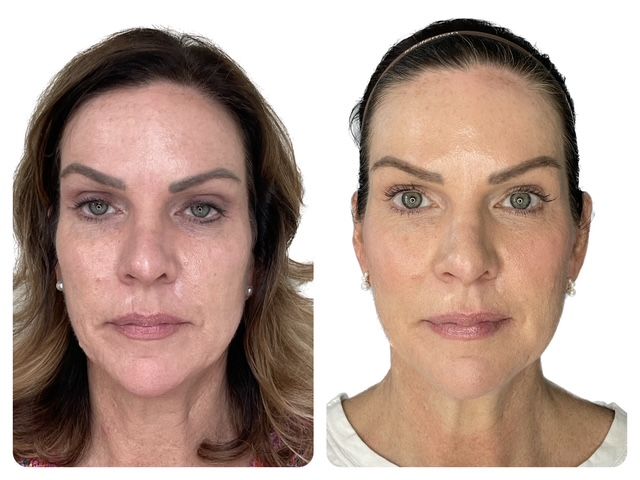
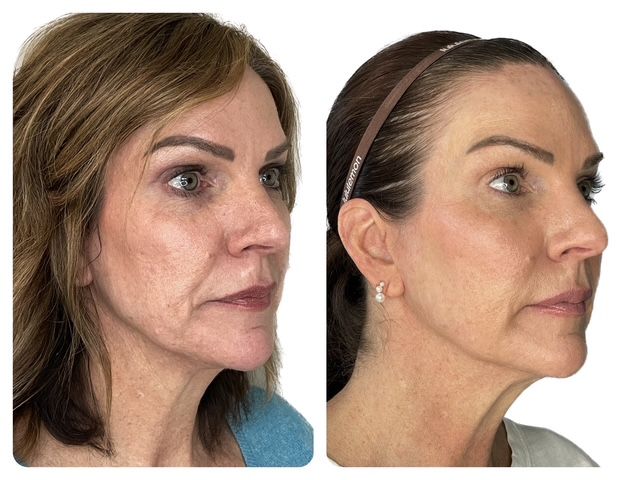
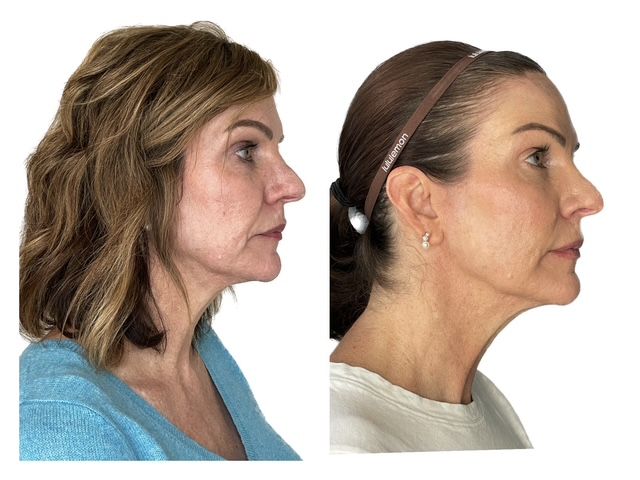
01 / Dullness and rough texture
Dullness and rough texture
- Usual first recommendation
- Dermaplane or facial
- Also consider
- DiamondGlow
- Downtime
- None
- Price
- $75 to $175
Treatment snapshot
A closer look
You do not walk in wanting radiofrequency microneedling. You walk in because your pores look larger than they used to, or because a spot on your cheekbone gets darker every summer. So find your concern here first, then read the detail on the treatments it points to.
Rough texture and dullness. Dead surface cells scatter light instead of reflecting it, which is most of what people mean by dull. A dermaplane, facial, or DiamondGlow smooths texture the same day. A PCA peel goes a layer deeper and trades a few days of flaking for a longer lasting change.
Sun damage and brown spots. Discrete spots respond well to IPL, which targets pigment with light. Diffuse blotchiness often does better with a VI Peel or a series of PCA peels. Melasma is a separate problem, covered below, because heat and light can worsen it.
Redness, flushing, and visible vessels. Broken capillaries and the background redness associated with rosacea are vascular rather than pigmented. IPL targets both vessels and pigment, so it is usually the first recommendation. Reactive skin gets a gentler overall plan, not a more aggressive one.
Acne, congestion, and enlarged pores. Active breakouts are managed with peels, extractions during a facial, DiamondGlow with the right serum, and a real home routine. Enlarged pores are structural and respond to collagen building over a series, meaning microneedling or Morpheus8.
Acne scarring. Depressed, rolling, and boxcar scars need remodeling below the surface. Microneedling in a series is the usual start. Morpheus8 goes deeper and is often better for established scarring. Neither erases a scar. The realistic goal is softening, over a series.
Fine lines and crepiness. Lines that sit in the skin at rest are a collagen and quality issue. Microneedling, Morpheus8, and peels each improve them to different degrees. Lines that appear only when you move belong to neurotoxin instead.
Laxity, jawline, and neck. Mild to moderate laxity is where Morpheus8 does its most distinctive work, because radiofrequency delivered at depth contracts and remodels tissue that surface treatments never reach. Significant laxity is a different conversation, pointing toward PDO threads or a surgical opinion.
Skin that looks fine in person and flat in photos. Sometimes texture is good and the skin still lacks bounce. SkinVive is a hyaluronic acid microdroplet injectable for smoothness and light reflection. It is not resurfacing, which is why it sits slightly apart from the rest of this menu.

Compare the options
01 / Dullness and rough texture
02 / Blackheads and congestion
03 / Sun spots and brown pigment
04 / Diffuse uneven tone
05 / Melasma
06 / Redness, rosacea, vessels
07 / Enlarged pores
08 / Acne scarring
09 / Fine lines and crepey texture
10 / Laxity, jawline, neck
11 / Body skin: chest, back, arms
12 / Flat, dehydrated looking skin
13 / Event in 48 hours
Treat this as the start of a conversation, not a prescription. Skin type, medication history, and how your skin has behaved before all change the answer.
Compare the options
01 / Chemical Peels
A controlled application of acids loosens the bonds between surface skin cells so the outer layer sheds and is replaced. Depth is set by the formula, the concentration, and the contact time.
PCA peel, $125, with a $55 retinol boost add on. Our workhorse superficial peel, customized at the visit for tone, congestion, early pigment, and texture. Mild flaking on days two through four. The retinol boost pushes turnover further and usually increases the peeling.
VI Peel, face and neck, $325, or buy 2 get 1 free. A medium depth peel for established pigment, uneven tone, fine lines, and acne scarring. You wear the solution home, wash it off on a schedule, and peel visibly from about day three to day six. The buy 2 get 1 free structure exists because this peel is built to be used in a series.
VI Peel body, $400 to $625, or a package of 3 for $800 to $1,250. The same chemistry on the chest, back, arms, or hands, priced by area size. Body skin turns over more slowly, so peeling starts later and results build more gradually.
Series. Superficial peels every four to six weeks, medium depth peels spaced further apart. Your provider sets the interval after seeing how your skin handled the first one.
02 / Facials, $135, or a package of 4 for $440
A full cleanse, exfoliation, extractions where appropriate, a treatment mask, and product chosen for your skin that day. It is the least aggressive treatment here and the most useful for maintenance between clinical work.
It addresses congestion, blackheads, dryness, and the general drift that happens when a home routine slips. It also gives your provider a regular look at your skin, which is how a plan gets adjusted before a problem becomes established.
Downtime. None, beyond an hour of mild redness if extractions were extensive. Series. Every four to six weeks, which is what the package of 4 is priced for.
03 / Dermaplaning, $75, or a package of 4 for $250
A sterile blade held at an angle removes the outermost layer of dead skin along with vellus hair, the fine down on the face. Nothing penetrates the skin.
It improves surface texture, dullness, and the way makeup sits, and it helps product absorb, so it is often added ahead of another treatment. The hair grows back at the same texture and rate it had before. It does not return coarser. That is a persistent myth.
Downtime. None, though skin is more photosensitive for a few days, so sunscreen matters more than usual. Series. Every four weeks, which tracks the skin's own cycle.
04 / DiamondGlow, $175, or a package of 6 for $875. With a facial, $275
One wand exfoliates with a diamond tip, extracts debris with suction, and infuses a condition specific serum in the same pass. Serum selection is what tailors it, with different formulations for congested skin, for dryness, and for tone.
It addresses dullness, congestion, dehydration, and uneven texture. Skin often looks brighter immediately, which is why it is a common choice before an event. The $275 combination adds the full facial protocol, including a mask and extended extractions, in a longer appointment.
Downtime. None. Series. Monthly, which is what the package of 6 is priced around.
05 / Microneedling, $350 to $500, or a package of 3 for $900 to $1,300. ReVamp with PRP, $650
A motorized pen creates thousands of controlled micro channels in the skin. The injury is deliberate and small, and the healing response it triggers builds new collagen over the following weeks and months.
It addresses acne scarring, enlarged pores, fine lines, crepey texture, and overall skin quality. Because it is mechanical rather than light based, it suits a much wider range of skin tones than IPL. Cost follows the area treated and the depth and number of passes needed: face alone sits at the lower end, adding neck, chest, or a body area moves it up.
ReVamp, $650, combines microneedling with platelet rich plasma drawn from your own blood at the visit, spun down, and applied as the channels are created. The rationale is that concentrated growth factors support the healing response. Results still vary from person to person.
Downtime. A sunburned appearance for roughly 24 to 48 hours, sometimes mild swelling on day one and light flaking around days three to five. Makeup is usually back on at 24 hours. Series. Three treatments four to six weeks apart, which the package of 3 is built around. Scarring often needs more than three.
06 / Morpheus8, face or body, $1,000 to $1,500, or a package of 3 for $3,000 to $4,500
Radiofrequency energy is delivered through insulated microneedles to a set depth beneath the skin. The needles create the channels and the radiofrequency heats the tissue below the surface. That deeper thermal effect is what separates it from standard microneedling.
It addresses skin laxity, jawline definition, submental fullness and the neck, deeper acne scarring, and texture that surface treatments have not moved. Body areas include the abdomen, arms, and knees. Price is set by the size and number of areas, and you get your number at consultation before you book.
Downtime. Redness and a grid pattern of tiny marks for two to four days, swelling on days one and two, dryness for up to a week. Most patients are presentable with makeup at day three.
Timeline and series. Some tightening is often noticed early, but the meaningful change is collagen driven and builds over three to six months, so the honest answer to "when will I see it" is later than most people want. Three treatments four to six weeks apart is standard. Results vary substantially with age, baseline collagen, degree of laxity, and sun protection afterward.
07 / IPL, $300 to $700, or a package of 3 for $800 to $2,000
Intense pulsed light. Broad spectrum light is filtered and delivered into the skin, where it is absorbed by pigment and by hemoglobin in small vessels. Absorbed light becomes heat, the target is disrupted, and the body clears it.
It is the most targeted option here for sun spots, freckling, general sun damage, background redness, rosacea associated flushing, and visible capillaries. Price follows area size and pulse count: face alone sits low in the range, face plus neck plus chest sits higher.
Downtime. Pigmented spots typically darken within a day, look like coffee grounds for several days, and flake off around days five to seven, with redness and mild swelling for a day or two. This is not a treatment to schedule the week of an event. Series. Three sessions three to four weeks apart is typical, with annual or seasonal maintenance.
Important limitation. IPL is not appropriate for every skin tone. Read the safety section below before booking this one.
08 / SkinVive, $750
A hyaluronic acid microdroplet injectable placed in small deposits just beneath the skin surface. It is an injectable for skin smoothness and hydration, not a resurfacing or exfoliating treatment, which is why it sits slightly apart from the rest of this page.
It improves smoothness and the quality of light reflection off the cheek in skin that is otherwise structurally fine. It is not a volumizing filler, so it adds no shape or lift, and it does not treat pigment or surface texture.

Plan the visit
Your provider looks at your skin under good light and asks what you have tried, what your home routine is, what medications you take, how you scar, and how you burn. That history changes the plan more than the concern does.
Your Fitzpatrick type is assessed individually. It determines whether light based treatment is on the table, at what settings, and whether pretreatment with a pigment suppressing product is warranted first.
You leave with the order of treatments, the interval between them, what each costs, and the total. Staging over months is normal.
Anything you need to do beforehand, usually sun avoidance and pausing retinoids, is given to you in writing before the appointment rather than at the door.
Numbing where it is needed, roughly 30 minutes for microneedling and Morpheus8. Post treatment product goes on before you leave.
Written instructions, product for the healing window, and a point of contact. Series appointments are booked before you leave so the interval actually holds.
What to expect, Skin Treatments
Avoid deliberate sun exposure and tanning of any kind, self tanner included, before peels, IPL, microneedling, and Morpheus8. Tanned skin changes how energy is absorbed and raises the risk of a pigment problem. Pause retinoids and exfoliating acids for three to seven days unless told otherwise, and mention any recent injectable so sequencing is right.
Facials, dermaplaning, and DiamondGlow are comfortable. Peels sting and warm for a few minutes. IPL feels like a rubber band snap with each pulse. Microneedling and Morpheus8 feel like pressure and heat, after topical numbing.
No makeup on freshly treated skin unless cleared. No exercise, saunas, hot tubs, or hot yoga. Cleanse gently with lukewarm water and use only what you were sent home with.
Peeling, flaking, or a grid pattern is expected after the deeper treatments. Do not pick, pull, or exfoliate skin that is coming off. Letting it shed on its own schedule is how you avoid a mark that outlasts the treatment.
Broad spectrum SPF 30 or higher daily, reapplied, plus a hat, for at least four weeks after any peel, IPL, or resurfacing treatment. Sun exposure on recently treated skin is the most common reason a good treatment produces a bad pigment outcome. If you have a beach trip booked, say so and we will schedule around it.
Surface results show early. Collagen driven results from microneedling and Morpheus8 build over three to six months, so the photograph that matters is taken well after the series ends.
Pricing
| Service | Price |
|---|---|
| PCA peel. $55 to add a retinol boost | $125 |
| VI Peel, face and neck, or buy 2 get 1 free | $325 |
| VI Peel, body, or package of 3 for $800 to $1,250 | $400 to $625 |
| Facial, or package of 4 for $440 | $135 |
| Dermaplane, or package of 4 for $250 | $75 |
| DiamondGlow, or package of 6 for $875 | $175 |
| DiamondGlow plus facial | $275 |
| Microneedling, or package of 3 for $900 to $1,300 | $350 to $500 |
| Microneedling plus PRP, called ReVamp | $650 |
| Morpheus8 face or body, or package of 3 for $3,000 to $4,500 | $1,000 to $1,500 |
| IPL, or package of 3 for $800 to $2,000 | $300 to $700 |
| SkinVive | $750 |
Included. Consultation and skin assessment, the treatment, post treatment product applied in office, and written aftercare.
Not included. Home care products, priced separately and covered on our medical grade skincare page. Treatments in a series beyond what a package covers. Any other modality performed at the same visit.
Why so many ranges. Microneedling, Morpheus8, IPL, and VI Peel body are priced by the size and number of areas treated. A face is not a face plus neck plus chest. You get your specific number at consultation, not at checkout.
Prices are subject to change and this page is not inclusive of all services, products, and discounts. See the full price list.
Fit, limits, and risk
The Fitzpatrick scale describes how skin responds to ultraviolet light, from type I, which always burns, to type VI, which rarely burns. Energy based devices carry a risk of post inflammatory hyperpigmentation, and that risk is meaningfully higher in Fitzpatrick types IV, V, and VI. This does not rule out treatment. It changes which treatment, at what settings, and with what preparation.
IPL targets pigment with light, so it cannot reliably distinguish the brown spot you want removed from the surrounding melanin in naturally deeper skin. In darker Fitzpatrick types it carries a real risk of burns, hypopigmentation, and hyperpigmentation, and we do not treat higher Fitzpatrick types with IPL here. If you have deeper skin and pigment concerns, other options exist, including chemical peel protocols and microneedling, which is mechanical rather than light based. Ask for that conversation rather than assuming the answer is no.
Tanned skin, including from a spray tan or self tanner, is a reason to reschedule peels, IPL, and resurfacing. Come back once it has faded.
Peels, microneedling, and other resurfacing can reactivate herpes simplex, and a reactivation on freshly resurfaced skin can leave a mark. Tell your provider if you have a history. Antiviral prophylaxis started before treatment and continued afterward is standard practice in that situation and is prescribed by a licensed provider after evaluation. An active outbreak means the appointment is rescheduled.
SkinVive and other injectables are not administered during pregnancy or breastfeeding. Most chemical peels, energy based treatments, and retinoid containing products are also deferred. Basic facials and dermaplaning are generally what remains available, and your provider will confirm what is appropriate. Tell us if there is any chance you are pregnant.
Active infection, open wounds, or inflamed acne in the area. A history of keloid or hypertrophic scarring. Active melasma, which can flare with heat and light and needs a deliberately gentler approach. Autoimmune or connective tissue disease affecting healing. Photosensitizing medications, including some antibiotics and diuretics. Recent facial surgery. Uncontrolled diabetes or another condition that impairs wound healing. A pacemaker or implanted electrical device, which is specifically relevant to radiofrequency. Recent injectable treatment in the same area, which is a sequencing question rather than a permanent exclusion.
Redness, swelling, dryness, flaking, tenderness, temporary darkening of pigmented areas, bruising with injectable and needling treatments, and small grid marks that fade. Less common: prolonged redness, post inflammatory hyperpigmentation, hypopigmentation, infection, blistering, scarring, and cold sore reactivation in susceptible patients.
Results vary. Skin type, age, baseline collagen, sun history, home care consistency, hormonal factors, and adherence to aftercare all influence the outcome. No treatment on this page produces the same result in two different people.
Why this practice
The consultation produces a sequence with intervals and a total, so you can decide what to do now and what to stage later.
Some skin problems are a home care problem, some are hormonal, and some need a dermatologist. Selling a large package to someone whose real issue is retinoid tolerance is not a plan.
These packages exist because these treatments work in series, not as a discount attached to a one time treatment.
at consultation, not at the moment the handpiece touches your face.
The WELL side handles hormone optimization, lab testing, and medical weight loss. Adult acne, melasma, and thinning skin often have an internal component, and you can address both without managing two practices.
which is useful when something on your skin turns out to be a medical question.
Questions, answered plainly
It depends on what you want to change. Texture and dullness respond to dermaplaning, facials, and DiamondGlow with no downtime. Brown spots and redness usually point to IPL. Scarring, pores, and fine lines point to microneedling. Laxity points to Morpheus8. Uneven tone points to a peel. Most plans combine two or three of these over several months rather than relying on one.
Pricing starts at $75 for a dermaplane and $125 for a PCA peel. A facial is $135, DiamondGlow is $175, and a VI Peel for face and neck is $325. Microneedling runs $350 to $500, IPL runs $300 to $700, SkinVive is $750, and Morpheus8 runs $1,000 to $1,500. Ranges reflect the area treated, and packages lower the per treatment cost.
Facials, dermaplaning, and DiamondGlow have essentially no downtime. You may be slightly pink for an hour after extractions, and skin is more sun sensitive for a few days after a dermaplane. Those are the treatments to book close to an event. Peels, IPL, microneedling, and Morpheus8 all involve visible peeling, redness, or marks, and should be scheduled at least two weeks out.
Not here. IPL targets melanin with light and cannot reliably separate a sun spot from the surrounding pigment in naturally deeper skin, which creates a real risk of burns, hypopigmentation, and hyperpigmentation. We do not perform IPL on higher Fitzpatrick skin types. Chemical peel protocols and microneedling, which is mechanical rather than light based, suit a much wider range of skin tones and are discussed at consultation.
Both create micro channels to trigger collagen production. Morpheus8 adds radiofrequency energy through insulated needles to a set depth, so it heats tissue below the surface as well. That deeper thermal effect makes it the stronger option for laxity and established scarring. Microneedling costs less, has shorter downtime, and is often the right starting point for pores, fine lines, and general skin quality.
Most clinical treatments here are recommended as a series. Microneedling and Morpheus8 are typically three sessions four to six weeks apart. IPL is typically three sessions three to four weeks apart. Peels are often a series of three to six. Facials, dermaplaning, and DiamondGlow are ongoing maintenance every four to six weeks. Your provider sets the number after assessing your skin.
Topical numbing is applied for roughly 30 minutes beforehand, and most patients describe the treatment as pressure with some vibration rather than sharp pain. Bonier areas such as the forehead and along the jaw are more sensitive than the cheeks. Afterward the skin feels hot and tight, similar to a sunburn, for about a day. Morpheus8 is more intense and adds a sensation of deep heat.
Yes, with more discipline about sun protection. Sun exposure on recently treated skin is the most common cause of an unwanted pigment result, so daily broad spectrum SPF 30 or higher, reapplication, and a hat are required for at least four weeks after a peel, IPL, or resurfacing treatment. If an outdoor stretch is coming up, tell your provider and the schedule gets built around it.
SkinVive is a hyaluronic acid microdroplet injected just under the skin surface to improve smoothness and how skin reflects light. It is not a volumizing filler, so it adds no shape or lift, and it is not a resurfacing treatment, so it does not exfoliate or address pigment. That is why it sits apart from the rest of this menu. It is $750 and is repeated rather than done once.
Melasma needs a deliberately gentle plan, because heat and light can worsen it. Aggressive resurfacing and IPL are usually the wrong first move. A typical approach starts with medical grade home care and sun protection, then adds a superficial peel series if the skin is tolerating it. Melasma is managed rather than resolved, it tends to recur with sun and hormonal change, and expectations are set accordingly.
Usually yes. Retinoids and exfoliating acids are typically paused three to seven days before peels, microneedling, IPL, and Morpheus8, then restarted once your skin has finished healing, often about a week afterward. Your provider gives you specific dates in writing beforehand. If you take oral isotretinoin, say so, because resurfacing and energy based treatments are deferred in that situation.
Usually yes, with preparation. Resurfacing can reactivate herpes simplex, and a reactivation on freshly treated skin can leave a lasting mark, so tell your provider about your history at consultation. Antiviral prophylaxis started before treatment and continued afterward is standard in that situation, prescribed after evaluation by a licensed provider. An active outbreak means rescheduling until it has fully resolved.
Book any peel, IPL, microneedling, or Morpheus8 treatment at least four to six weeks before the event, and finish a series two to three months out so collagen driven change has time to show. In the final week, stay with a facial, dermaplane, or DiamondGlow. Do not try a new clinical treatment for the first time inside a month of an event.
This page is for general education and is not medical advice. All treatments described here are performed only after evaluation by a licensed provider who determines that treatment is appropriate for you. Individual results vary and no outcome is guaranteed. Some treatments described are not appropriate for all skin types. Prices are subject to change and this page is not inclusive of all services, products, and discounts.