
WELL. · Hormones
Hormone Optimization in Louisville
Measure first, then treat what the numbers and your symptoms agree on, and keep measuring. Hormone care at LouWellSpa runs on a membership so that labs, visits, and dose adjustments are all part of one predictable cost instead of a bill every time something needs checking.

Treatment snapshot
At a Glance
- First visit
- Lab draw, then a consultation to review results, 45 to 60 minutes
- Discomfort
- A standard blood draw. Pellet insertion uses a numbed incision at the upper hip
- Downtime
- None for topical or injection. Pellet insertion carries a few days of activity limits
- When you notice a change
- Often 3 to 6 weeks for energy, sleep, mood, and libido. Body composition shifts take 3 to 6 months and depend heavily on training and diet
- Monitoring
- Recheck 6 to 8 weeks after starting or after a dose change, then on your provider's schedule
- Delivery options
- Topical, injection, or pellet insertion
- Cost structure
- $199 initial labs plus consultation, then $1,500 per year or $150 per month
A closer look
What Hormone Optimization Means Here
Hormone optimization is ongoing management of measurable hormone levels in the context of how you actually feel. Labs first, then a full symptom history, then a plan only where the two agree. A number alone is not a diagnosis, and a symptom alone is not a prescription.
The LouWell menu calls this a precision based approach aimed at the prevention of chronic disease. That deserves a plain explanation. Hormone therapy is not proven to prevent chronic disease, and this page does not claim it does. What a structured program does is treat deficiencies that are causing symptoms while tracking modifiable risk factors over time: body composition, blood pressure, lipids, fasting glucose or A1c, sleep. Both are worth doing. Neither is a shield against future illness.
Perimenopause and menopause. Hot flashes, night sweats, broken sleep, mood volatility, brain fog, vaginal dryness, and a change in where weight sits. Perimenopause often begins years before the final period and gets missed, because one level drawn on a random day of a fluctuating cycle can look unremarkable.
Low testosterone in men and in women. In men: fatigue sleep does not fix, reduced libido, erectile changes, muscle loss despite training. In women, testosterone is the least discussed of the three main hormones, and low levels can contribute to low libido and low energy.
Thyroid, including hypothyroidism. Cold intolerance, fatigue, dry skin, hair thinning, slowed thinking, weight change. These overlap almost entirely with the categories above, which is why thyroid belongs in the same workup rather than a separate appointment months later.

Who This Is For
This service fits people who recognize several of these together, not one in isolation:
- Hormonal changes or imbalance you cannot get looked at systematically
- Menopause and perimenopause symptoms, including hot flashes, night sweats, and sleep that broke and never repaired
- Low energy and fatigue lasting months without an obvious cause
- Decreased libido or other sexual wellness concerns
- Weight changes or difficulty losing fat despite consistent effort
- Hair loss or thinning
- Strength or muscle loss in someone who is still training
- Mood, irritability, or concentration changes that arrived with the physical ones
It is the wrong service if a hormone panel does not explain your complaint. Fatigue comes from iron deficiency, sleep apnea, depression, and medication side effects far more often than from testosterone. Looking for those is part of the first visit, and if one is the answer, you hear that instead of starting therapy.
Pricing
Clear numbers, before treatment.
| Service | Price |
|---|---|
| Initial labs plus consultation | $199 |
| Yearly membership | $1,500 per year |
| Monthly membership, first 3 months due at initiation | $150 per month |
| Pellet insertion, male, in addition to yearly fee | $150 per insertion |
| Pellet insertion, female, in addition to yearly fee | $100 per insertion |
Prices are subject to change and this page is not inclusive of all services, products, and discounts. See the full price list.
What the Membership Includes
The membership is $1,500 per year, or $150 per month with the first three months collected at initiation. It covers:
- Routine labs, the recurring panels ordered to follow your levels and safety markers over time
- Testosterone, topical or injection, meaning the medication itself when delivered by cream, gel, or injection
- Visits, including follow ups, dose reviews, and lab result reviews
It does not cover:
- The $199 initial labs plus consultation, charged separately at the start
- Pellet insertions, billed per insertion in addition to the yearly fee: $150 for men, $100 for women
- Advanced panels. Micronutrient testing, pharmacogenetics, telomere testing, and Nutrigenomix are priced on the lab testing page
- Other services, including IV therapy, weight loss medication, and aesthetic treatments
Compare the options
Topical, Injection, and Pellet: An Honest Comparison
There is no single best delivery method. There is the one that matches how adjustable your dose needs to be and how much daily maintenance you will actually do.
01 / Topical
Topical
Applied to the skin daily. Levels stay relatively even, the dose changes immediately, and stopping means not applying it. The tradeoffs are real: absorption varies between people and can be inconsistent, it has to be applied every day, and testosterone can transfer to another person through skin contact, so the site stays covered and care is taken around partners, children, and pets.
02 / Injection
Injection
Given on a schedule your provider sets, commonly weekly or more often, subcutaneously or intramuscularly. Absorption is more predictable than topical, titration is easy, and there is no transference risk. You have to be comfortable with needles or come in for it, and long gaps between doses can create a peak and trough pattern where energy and mood track the cycle.
03 / Pellets

Pellets
Placed under the skin at the upper hip through a numbed incision in a short office visit, releasing over months. Nothing to remember daily, nothing to inject. The tradeoff is the one patients are least often told: once a pellet is in, the dose cannot be adjusted. If your level runs high, you either wait it out or have it removed, a second procedure. Insertion carries the risks of any minor procedure, including bruising, bleeding, infection, extrusion, and a small scar, and pellets cost extra on top of the membership several times a year.
LouWellSpa / Neighborhood NP is a Biote certified provider. View the official Biote provider listing for 500 N English Station Rd, Suite 101, Louisville, KY.
Many patients start on topical or injection because those are adjustable, then move to pellets once a stable dose is established.
Plan the visit
How It Works at LouWellSpa
The plan
If therapy is indicated, you choose hormone, dose, and delivery method together and hear the risks that apply to you specifically. If it is not indicated, you get the reasoning and a referral path.
Enrollment
$1,500 for the year, or $150 monthly with the first three months at initiation. Pellet fees are quoted before any insertion.
First recheck
Roughly 6 to 8 weeks in, labs are repeated and the dose is adjusted. Almost nobody lands on the final dose on the first attempt, and this visit is where most of the work happens.
Ongoing monitoring
Levels plus safety markers on your provider's schedule, with a visit to review each set. Testosterone monitoring generally includes hematocrit and hemoglobin, since red blood cell count can rise on treatment.
Annual reassessment
Symptoms, labs, risk factors, and whether continuing still makes sense.
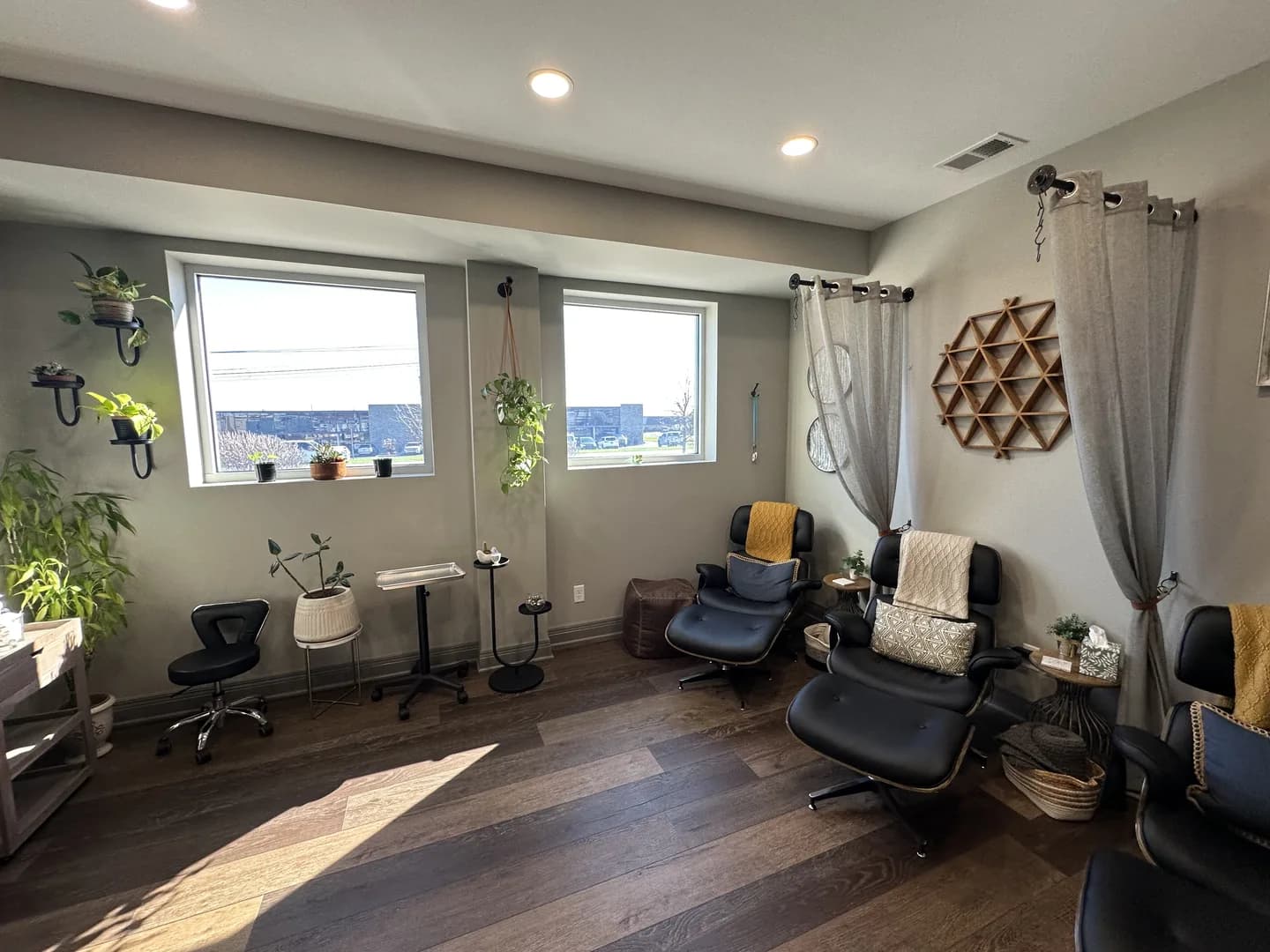
What to expect, Hormone Optimization
What to Expect
First two weeks
Usually very little. Some people report better sleep early. Judging the therapy here is premature.
Weeks 3 to 6
Energy, mood, motivation, and libido most commonly begin to shift here. Hot flashes and night sweats often improve within the first several weeks of estrogen therapy, with fuller effect over two to three months. Thyroid levels take roughly six weeks to stabilize, which is why that recheck is not scheduled sooner.
Months 3 to 6
Body composition changes, when they happen, show up here, and they depend on resistance training and protein intake at least as much as on the prescription.
Ongoing
Response varies. Some patients feel clearly different, some modestly better, and some do not respond enough to justify continuing. That last outcome is legitimate, and stopping is discussed as openly as starting.
After a pellet insertion
Keep the site clean and dry, do not submerge it, and skip strenuous lower body exercise for the period your provider specifies, commonly several days.
Fit, limits, and risk
Safety, Candidacy, and Who Should Not Do This
Hormone therapy is prescription medical care with real risks, and testosterone is a controlled substance in the United States. It is started only after evaluation and continued only with monitoring.
Therapy is generally not appropriate if you
are pregnant, trying to conceive, or breastfeeding; have a current or past hormone sensitive cancer, including breast cancer or, in men, prostate cancer; have unexplained vaginal bleeding; have a history of blood clots or stroke, or a known clotting disorder; have active liver disease; or have untreated severe obstructive sleep apnea or an elevated red blood cell count.
Tell your provider if you
are a man who wants to father a child in the foreseeable future, since testosterone suppresses sperm production and that suppression is not always reversible; have heart disease, high blood pressure, or heart failure; take anticoagulants; have migraine with aura; or have reacted badly to hormone therapy before.
Risks to discuss
For testosterone: higher red blood cell count, acne, fluid retention, worsening sleep apnea, testicular shrinkage, infertility, and in women unwanted hair growth or voice change if the dose runs high. For estrogen and progesterone therapy, risks differ by age, time since menopause, personal history, and formulation, which is why that conversation is individual rather than general.
Individual results vary and no outcome is guaranteed.
Why this practice
Why Patients Choose LouWellSpa for This
One predictable cost instead of a meter running
Labs, topical or injectable medication, and visits sit inside the membership, so asking for a recheck is not a decision about money.
Delivery method is a discussion, not a house policy
Some practices place pellets by default because pellets are billable. Here the tradeoffs go on the table first, including that a pellet cannot be dialed back once it is in.
Symptoms and numbers both count
A value inside a reference range does not end the conversation, and a symptom without a supporting number does not automatically produce a prescription.
The rest of the picture is in the same building
Lab testing, medical weight loss, and IV therapy sit on the WELL side, the SPA side handles the visible layer, and Neighborhood NP runs primary care in the same suite.
Questions, answered plainly
Frequently Asked Questions
What does hormone optimization cost at LouWellSpa?
Initial labs plus consultation are $199. After that the membership is $1,500 per year, or $150 per month with the first three months collected at initiation. The membership covers routine labs, testosterone delivered topically or by injection, and your visits. Pellet insertions are billed separately at $150 per insertion for men and $100 for women, in addition to the yearly fee.
What is not covered by the membership fee?
The membership excludes the $199 initial labs and consultation, which is charged at the start, and it excludes pellet insertion fees. Advanced testing such as micronutrient panels, pharmacogenetics, telomere testing, and Nutrigenomix is priced separately, as are IV therapy, weight loss medication, and aesthetic services. Anything outside the membership is quoted before it is ordered.
How long until I feel different?
Most people who respond notice changes in energy, sleep, mood, or libido between three and six weeks. Hot flashes and night sweats often improve within the first several weeks of estrogen therapy, with fuller effect over two to three months. Body composition changes take three to six months and track closely with training and nutrition. Some people do not respond enough to continue.
Which delivery method should I choose?
It depends on how adjustable you want your dose to be. Topical is applied daily, changes easily, and carries a transference risk through skin contact with other people. Injection gives predictable absorption and simple titration but requires needles. Pellets remove the daily task but cannot be adjusted once placed, involve a minor procedure, and cost extra per insertion.
Does hormone therapy prevent chronic disease?
A monitored program treats hormone deficiencies that are causing symptoms while tracking modifiable risk factors such as body composition, blood pressure, lipids, and glucose over time. Those are worthwhile on their own terms.
Do you treat hypothyroidism and other thyroid problems?
Thyroid function is assessed as part of the hormone workup, because thyroid symptoms overlap almost completely with the symptoms that bring people in for perimenopause or low testosterone. If hypothyroidism is identified, treatment and monitoring are discussed at your consultation. Thyroid levels take roughly six weeks to stabilize after a dose change, so rechecks are scheduled at that interval rather than sooner.
Is testosterone therapy only for men?
No. Low testosterone occurs in women and can contribute to low libido, low energy, and a reduced sense of wellbeing, at doses that are a small fraction of male doses. Important context: there is no FDA approved testosterone product for women in the United States, so this is an off label use, and monitoring matters because excess dosing can cause unwanted hair growth or voice changes.
What if my labs are normal but I still feel terrible?
That situation is common and it is not dismissed here. A single value inside a reference range does not rule out a problem, particularly in perimenopause when levels fluctuate week to week. It also does not mean hormones are the cause. Iron deficiency, sleep apnea, thyroid disease, depression, and medication side effects are frequent explanations, and looking for them is part of the visit.
How often will I need labs and appointments?
Expect a recheck roughly six to eight weeks after starting and after any dose change, since that is when levels have settled enough to interpret. Your provider then sets an ongoing schedule based on your therapy and safety markers, with at least an annual reassessment. Testosterone monitoring generally includes red blood cell count. Routine monitoring labs are included in the membership.
Can I stop, and what happens if I do?
Yes, and it is better planned than abrupt. Topical and injectable therapy clears relatively quickly and symptoms typically return toward where they were before treatment. Pellets keep releasing until exhausted or surgically removed. Men should know that testosterone suppresses the body's own production, and recovery after stopping varies between individuals and is not always complete.
Can I combine this with weight loss or aesthetic treatments?
Yes, and it is common. Medical weight loss, IV therapy, and lab testing sit on the WELL side of the menu and aesthetic services sit on the SPA side, all at one address. Your provider sequences appointments so that treatments and lab draws do not interfere with each other. Each service is billed separately from the hormone membership.
Important information
This page is for general education and is not medical advice. Hormone therapy involves prescription medications that are provided only after evaluation by a licensed provider who determines that treatment is appropriate for you. Hormone therapy is not proven to prevent chronic disease, and nothing on this page should be read as a claim that any service prevents, treats, or cures disease. Individual results vary. No outcome is guaranteed. Prices are subject to change and this page is not inclusive of all services, products, and discounts.